
Dieu grammairien
Mythological monologue for one persona,
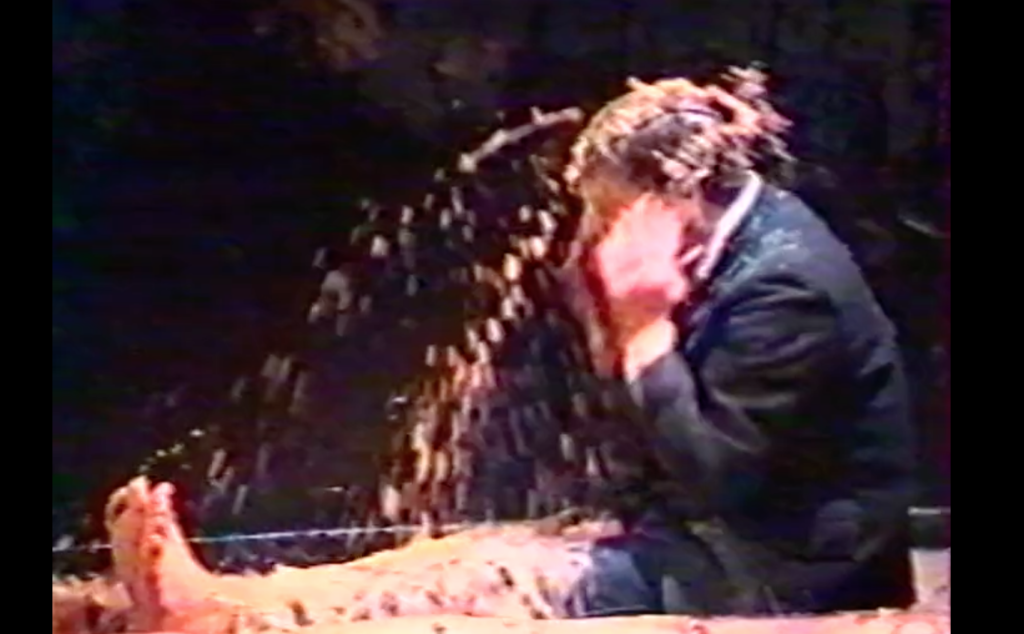
a stick, a furrow, a line of mud, and nothingness.
Théâtre de la Bastille, 1991
Featuring Philippe Dormoy
Dieu Grammairien plays with the words of Jean-Pierre Brisset, a stationmaster from the last century,
author of a Logical Grammar stating that the world’s origin lies coiled deep within words,
and that man’s ancestor is not the ape, but the frog.
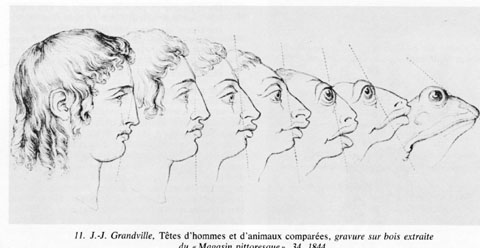
En Pierre Brisée, a wild feral child of sorts, remains captive to a drama of expression.
Picture a man whose Adam’s apple invades his entire body… drowning in his own tongue.
Thus, Dieu Grammairien confuses actor and tractor, man of clay and flesh of earth, father and stone (père/pierre),
mother and sea (mère/mer), grandmother and grammar (grand-mère/grammaire), voice and way (voix/voie), bone and water (os/eaux), language and bandage,
theatre and tomb, God, gram, and nothing at all (Dieu, gramme et rien).
Recording
L’Analogue
Villa Medici, Rome
Théâtre de la Bastille, 1995
Featuring Gabriella Bartolomeï
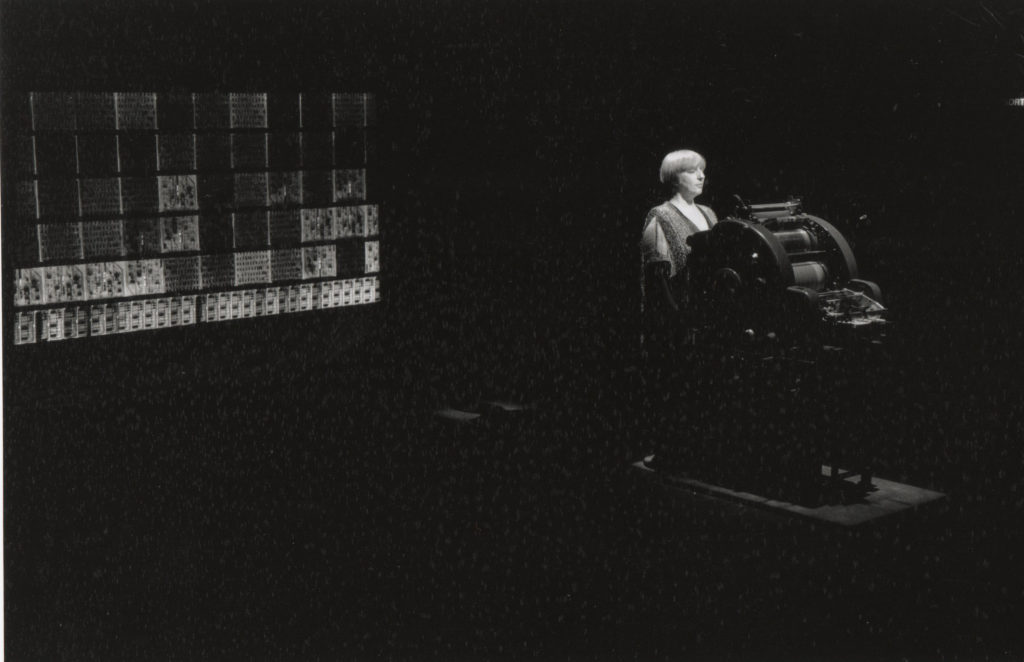
A kind of Future Eve, a creature born from a typographic engine,
comes forth to offer us the deciphering of a world imprinted within her.
A voice capable of mimicking anything, a demon of analogy, she decodes scores spun from cabalistic signs,
from military handkerchiefs, from legends (Monsieur Seguin’s Goat, The Tales of Hoffmann).
This phenomenal voice articulates, breathes like a pythia,
a hieroglyphic universe that I conjured through a sprawling wall of (green) printed circuit boards.
Lit in translucence, they emerge as the very glyphs
she imprints into sound. After the stone age
(wall of earthen imprints, Adam's apple, bones of
ancestors), we now inhabit the iron age
(typographic machine, microphone, printed circuits)
L’Analogue stages the spectacle of a body made of print.
Juliette Pose 97
École des Beaux-Arts de Paris, 1997
Featuring Anne de Broca
An exchange of letters between Juliette Drouet and Victor Hugo—a secret dialogue spanning fifty years—
from which actress Anne de Broca draws a ritual performance
every February 17th for the past ten years.
It was on the night of February 16th to 17th that the two lovers first met.
Each year, Anne de Broca invites a different director
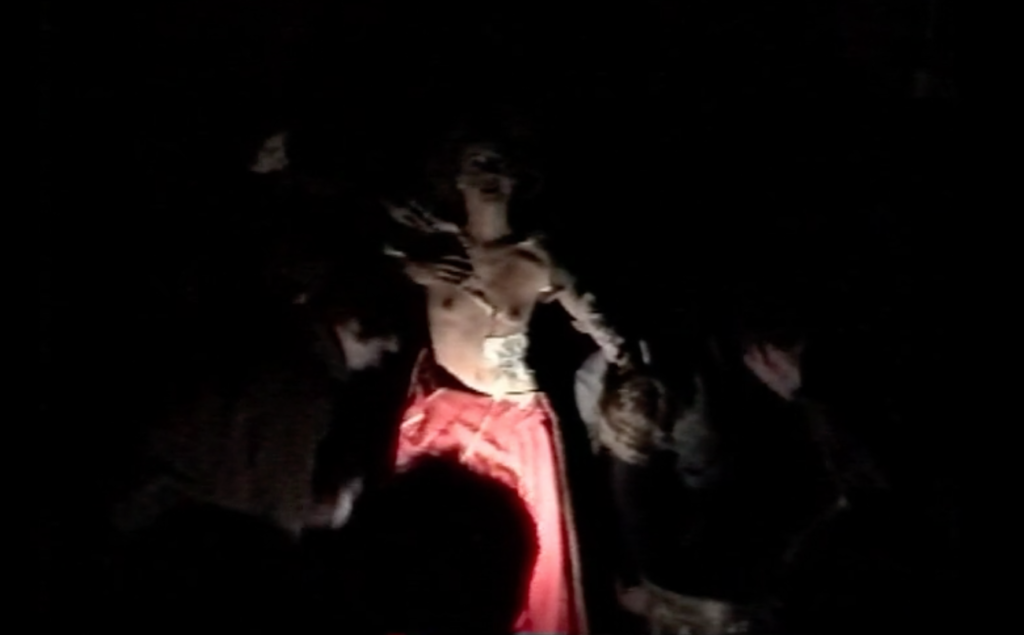
to stage her through the gradual stripping-bare of this tireless correspondence.
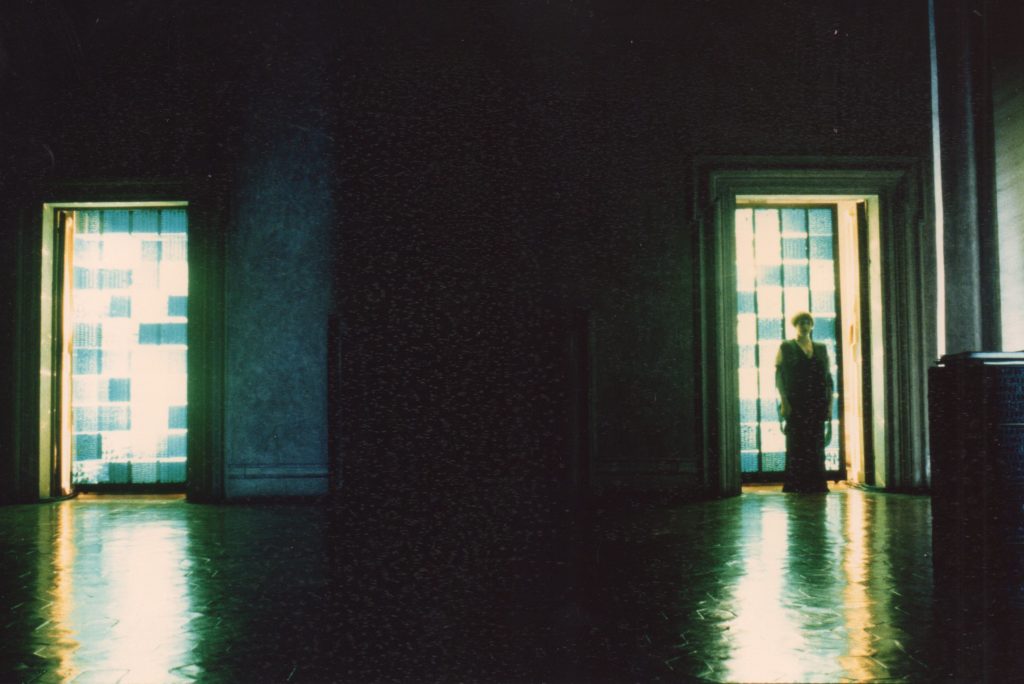
Here, Juliette Drouet stands at the École des Beaux-Arts in Paris, where she once posed as an artist's model.
She poses before the audience and four actual students who sketch her throughout the performance.
It is about re-enacting the gesture of inscribing, of tracing lines.
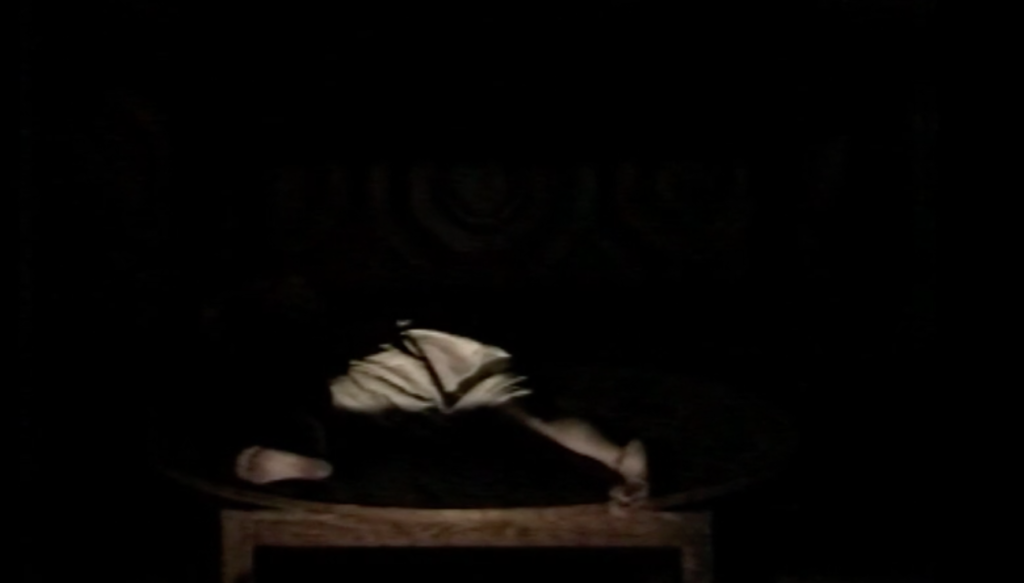
Paper invades everything: scattered letters, sketchbooks of the fine arts students, wings forged of parchment,
papier-mâché cast directly onto the skin
of the model-actress, heightening the aura of amorous fetishism.
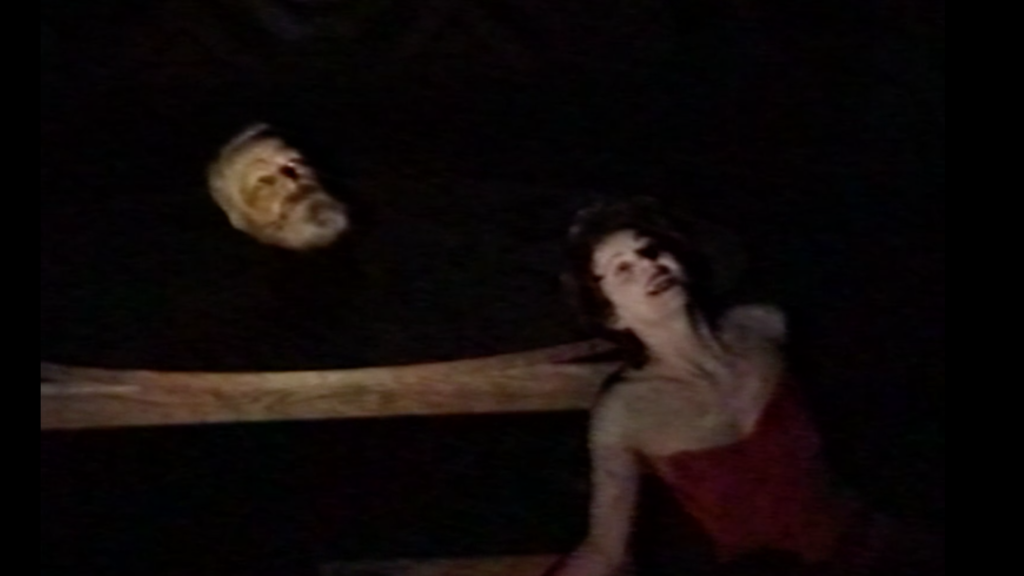
Victor's head (Victor, whom Juliette christened “Tête à Toto”),
borrowed from the Musée Grévin, becomes in turn Juliette’s fetish, her muse.
Recording
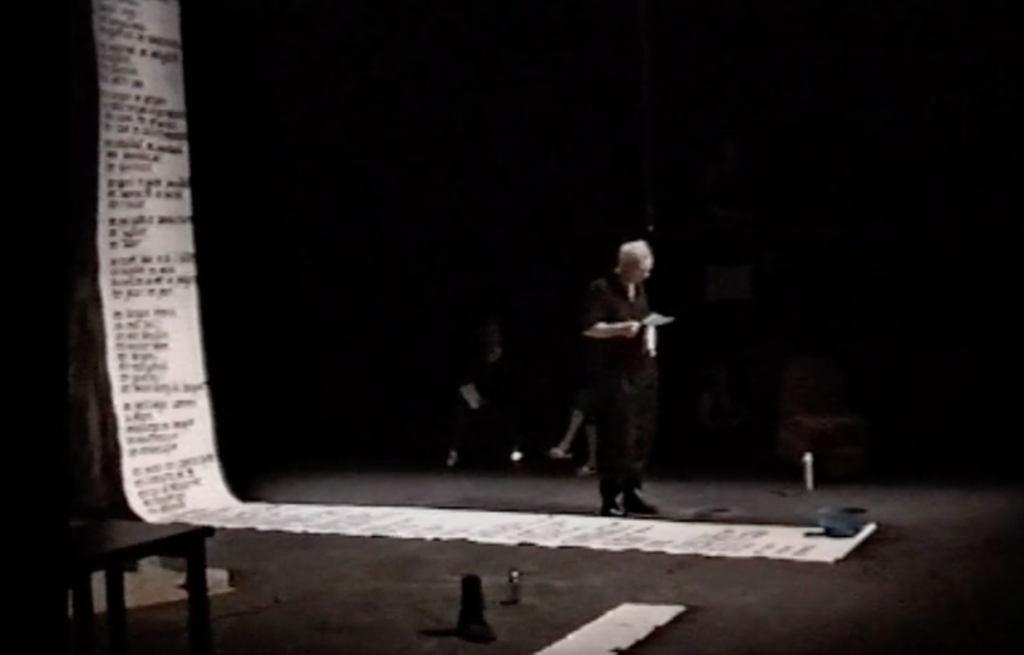
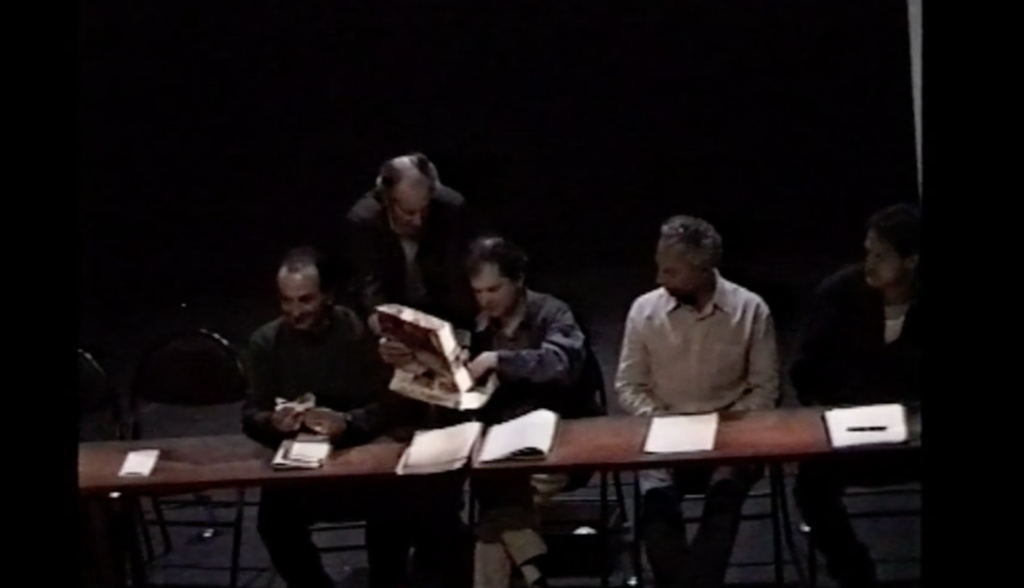
Through the Teeth
A Night in Twelve Tongues
Théâtre de la Bastille, 1998
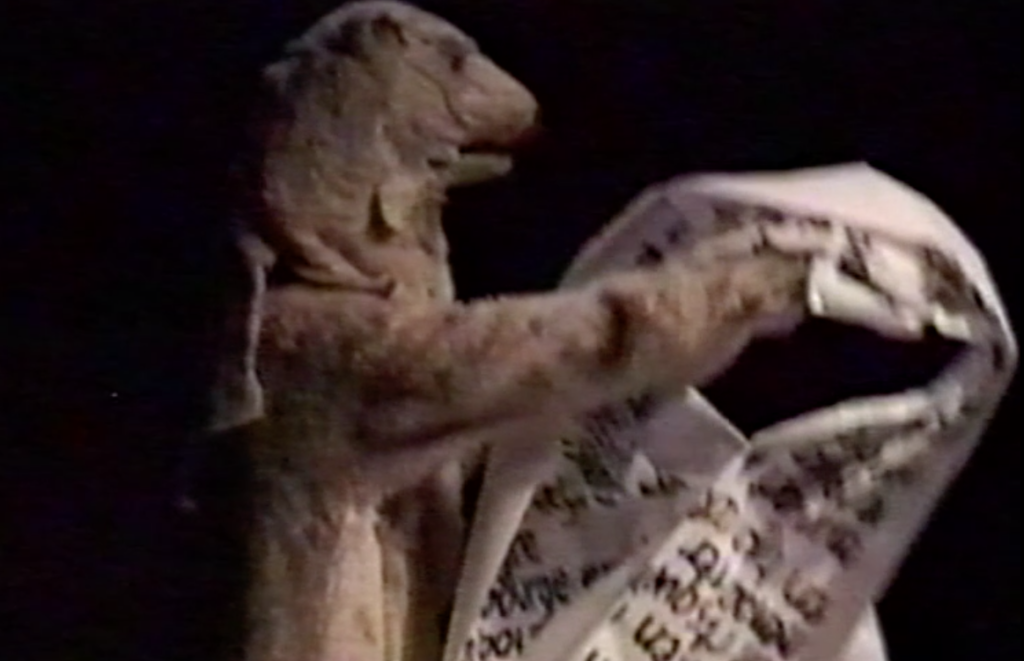
A night where, brought back to its place of origin—the table—, language is articulated by its author.
The author-actor delivers their rhythm, their harmonies, diffuses their essence,
lays bare their inflections, their music, and, through the teeth,
the fierce rage of their expression.
All authors of the French language, unhinging the tongue from its frame
(the page), all authors of a living language,
of a spoken tongue, a “mouth theater”.
Recording
Snow White
Swiss Cultural Center, Paris, 2001
Tableau vivant white on white
after Snow White, a fairy dramolet by Robert Walser
With the voice of Pierre Fédida
The Queen: Anne Alvaro
The Huntsman: Marc Albert
Snow White: Manuela Morgaine
Cinematography: Sabine Lancelin
Costumes: Anne Brault
Scenographic Double: Virginie Berry
Production: Envers compagnie, France-Culture, La Muse en Circuit.
With the participation of the Little People Association
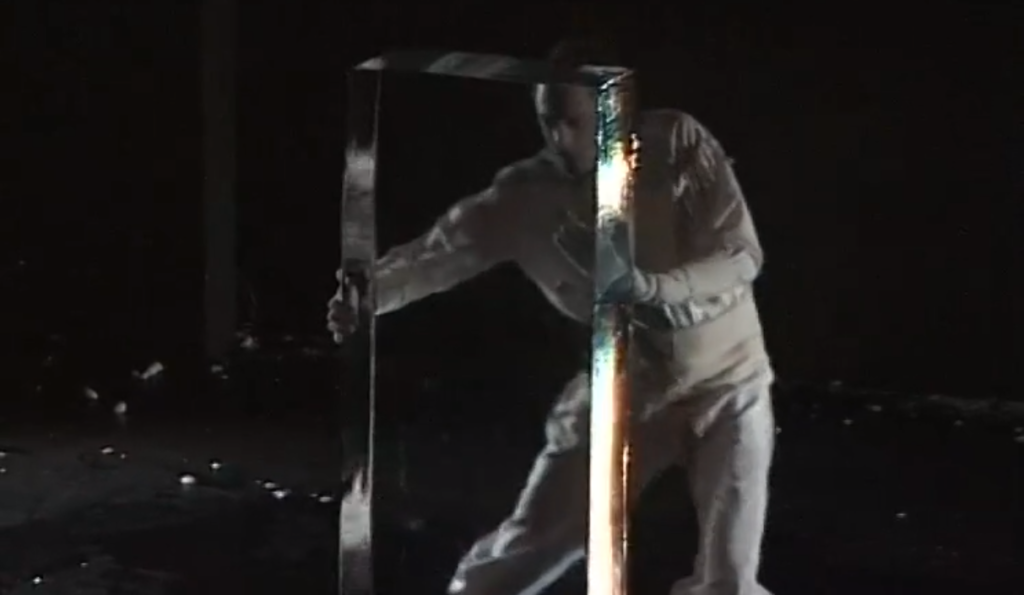
Snow White. The Brothers Grimm wrote it. And then Robert Walser.
Walt Disney and João César Monteiro filmed it.
The former in Technicolor animation, the latter entirely in black.
Yet another version of Snow White, this one—Snow White unhyphenated—
chooses white, overexposure, the fairy realm, the ghost, winter,
ice, snowfall and snow petals, figures emerged from a
glass coffin and words turned into music boxes.
Not quite a spectacle, nor a choreography or performance,
not entirely a concert, nor a shadow play, but a tableau vivant,
radiophonic, what in 1900, in the days of Walser, of Isadora Duncan,
of Mallarmé and Maeterlinck, was called a “static drama”.
Here, voices play out the archaic, repetitive gesture of Robert Walser's slow, overlooked poem.
The soundscape dreams of drawing,
with its frequency peaks, the jagged contours of the Alps.
And seeks, at the very heart of modernity, where the snows of yesteryear have gone.
On Christmas Eve 1956, Robert Walser falls dead in the snow.
He wears a black suit. His hat rests beside him.
In 2000, João César Monteiro films Branca de Neve in the botanical gardens of Lisbon,
draping his black jacket over the camera lens
throughout the shoot: voice-in (delivering Walser’s text in Portuguese)
and image-off offering up, for nearly the entire film, a black screen.
As if to re-gather the perspective of the dead.
Minor, inward experiences, like gloves turned inside out over
lines of hands so peculiar, greeting with whimsicality,
velvet, felt, silence, obscurity, a world of too lyrical appearances.
It is in homage to the writer Walser, and to the black lining of Monteïro's
screen, that this ephemeral object, this phantom, lays down the shroud of its legends.
A padded shroud, white, snow.
Recording
Radio version – France Culture – 2001

Article published in the journal GRAPE, journal of childhood and adolescence, 2002.