ALL TEARS ARE SALTY
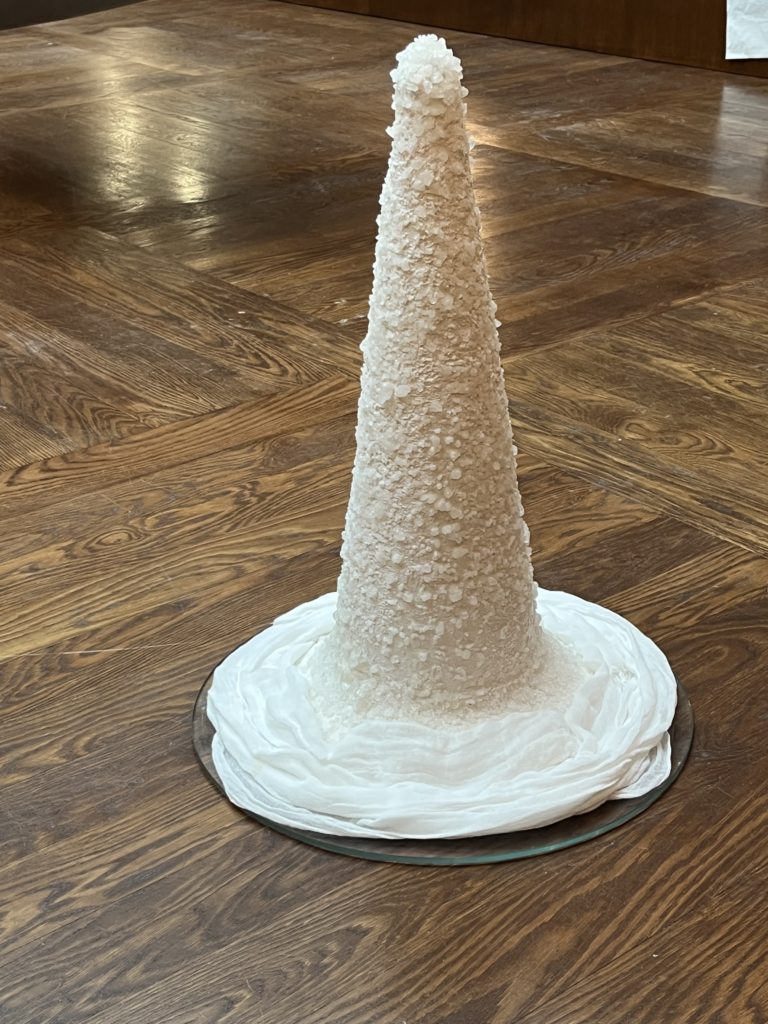
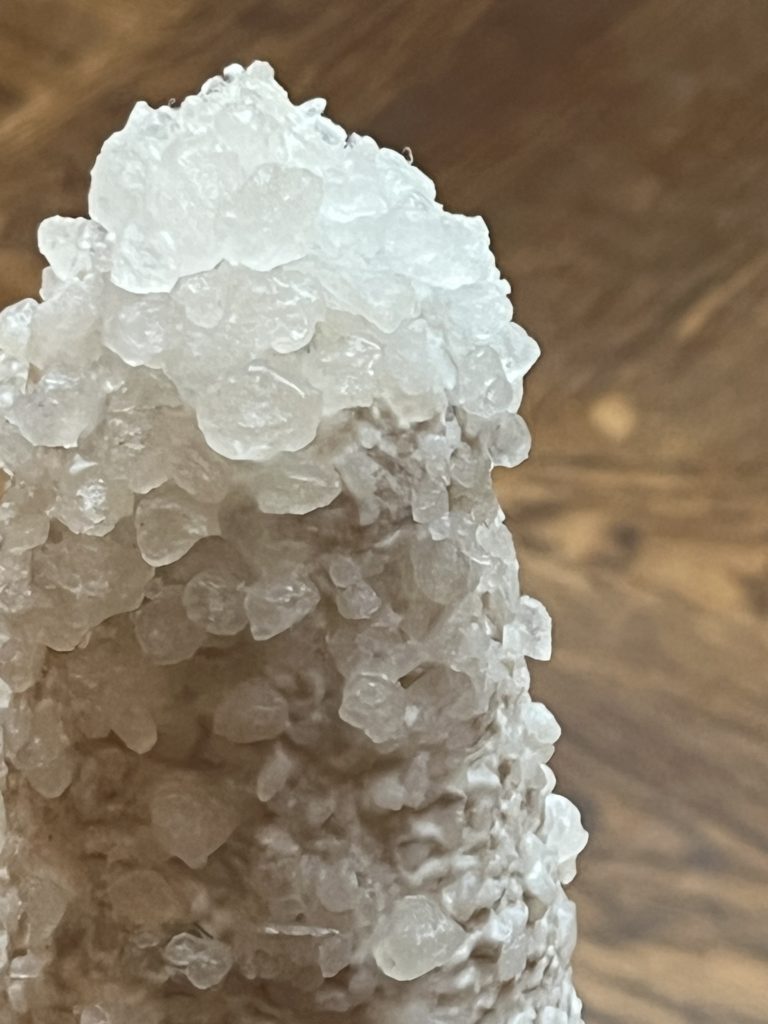
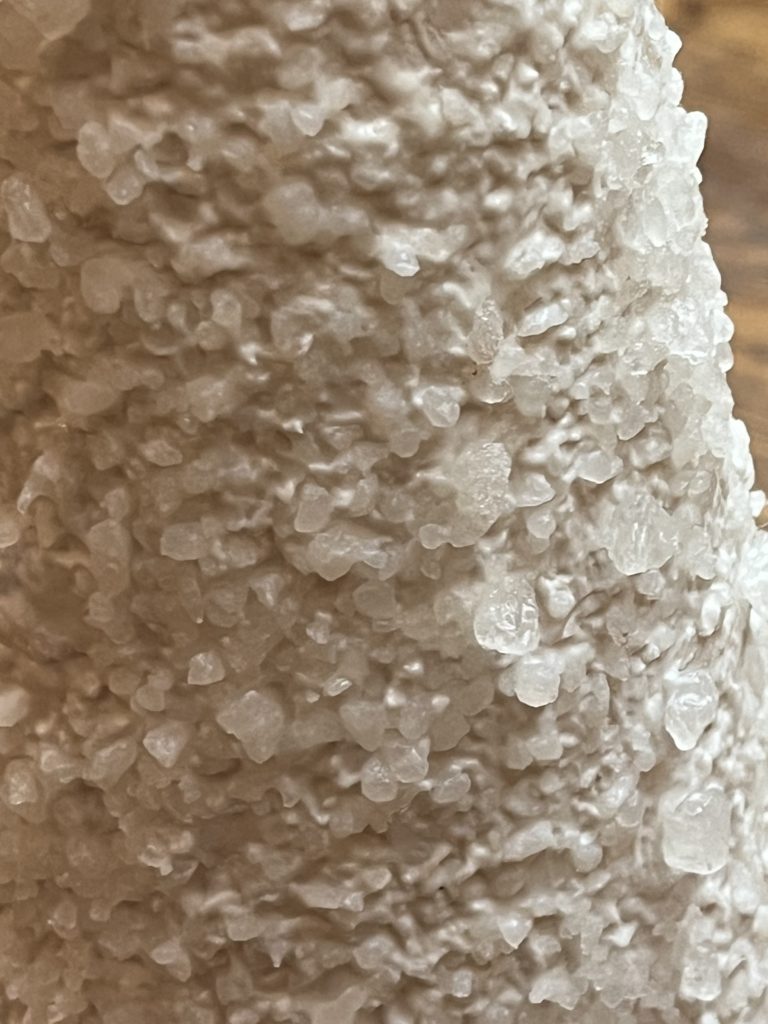
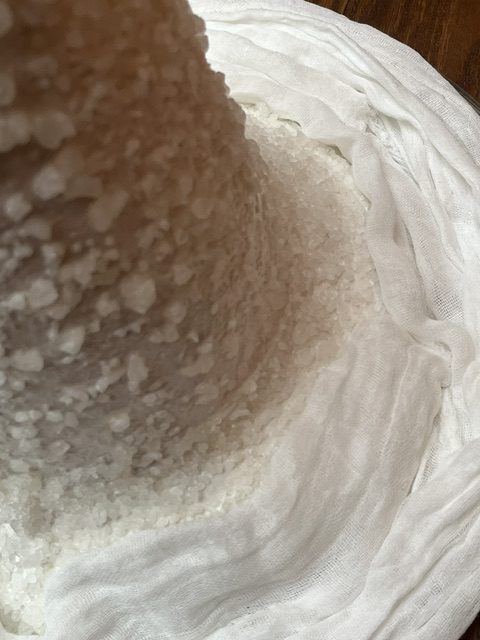
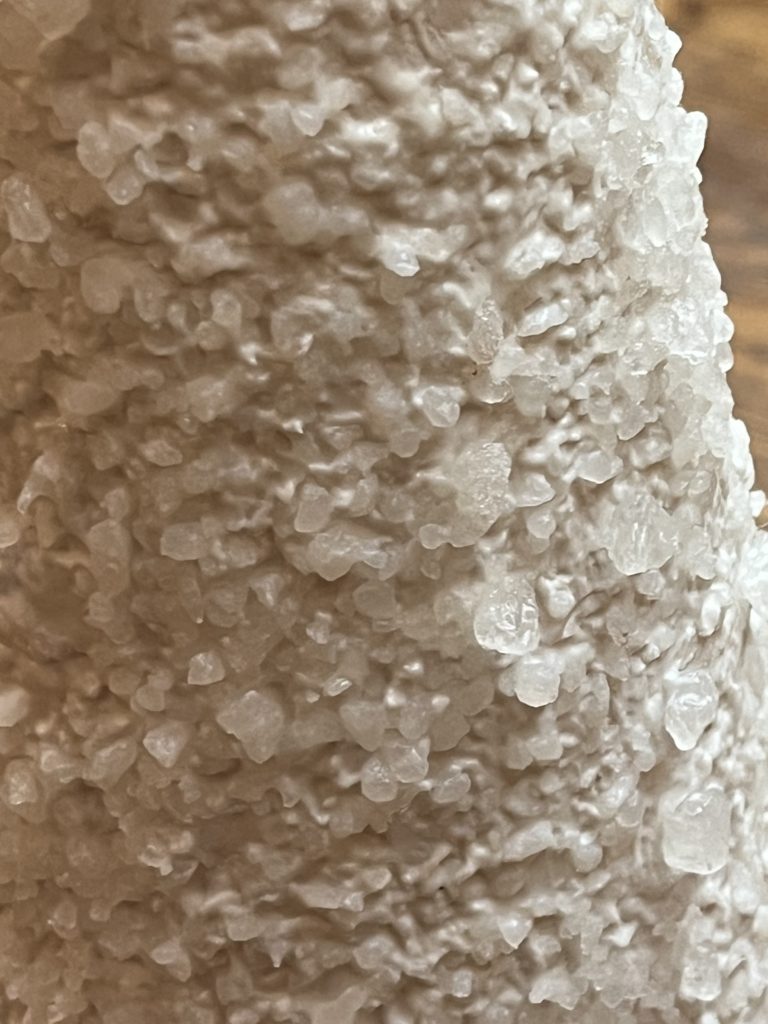
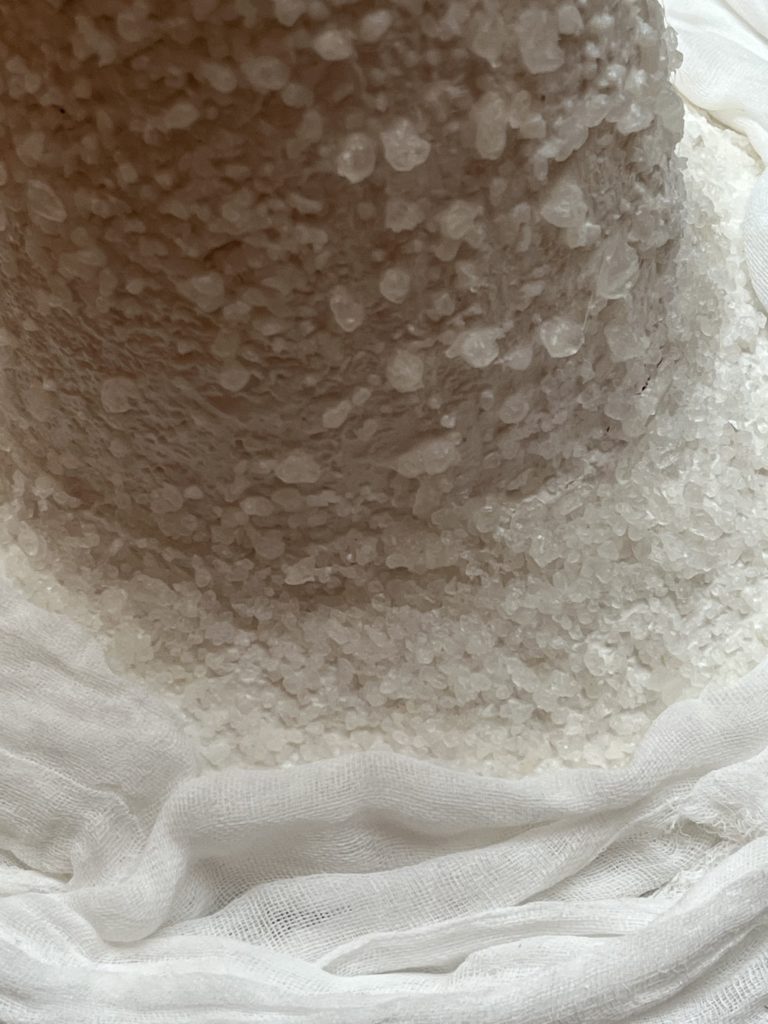
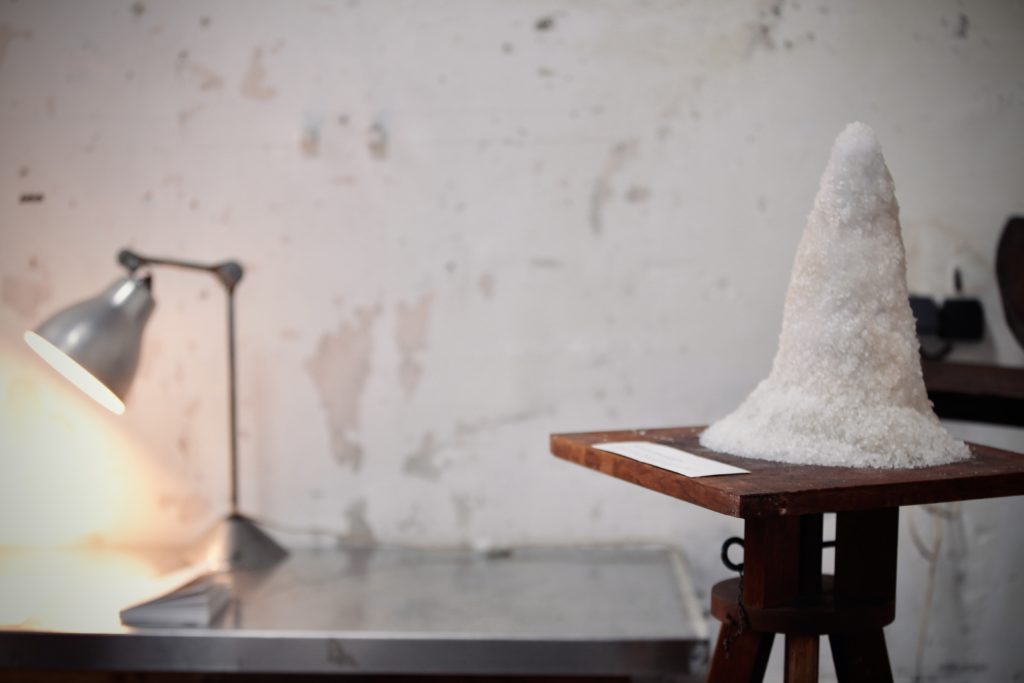
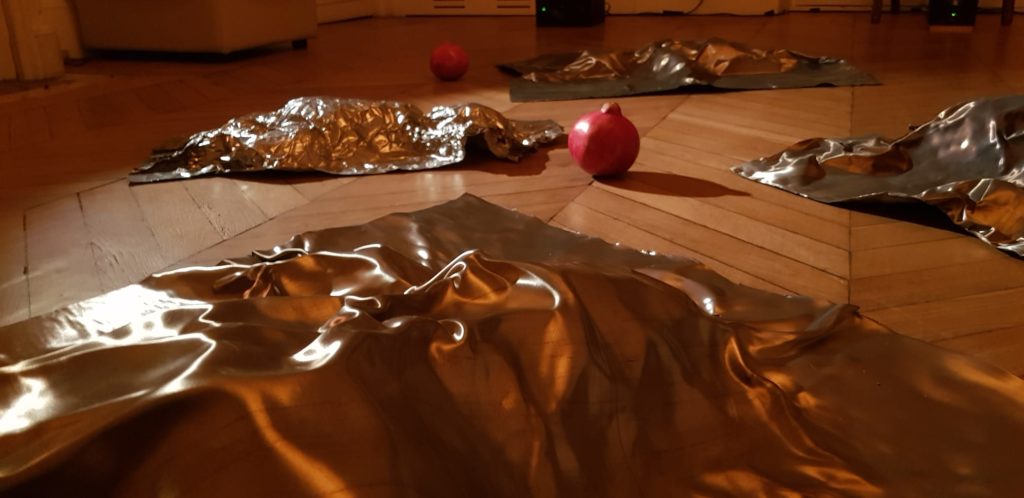
dead sea salt block – February 2026
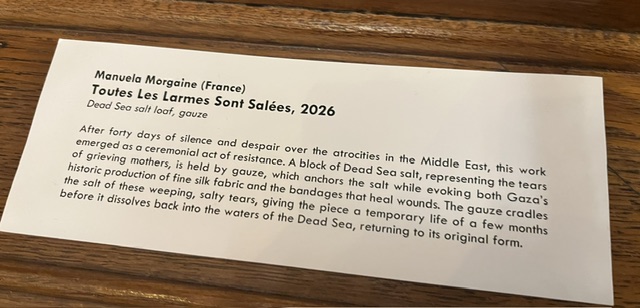
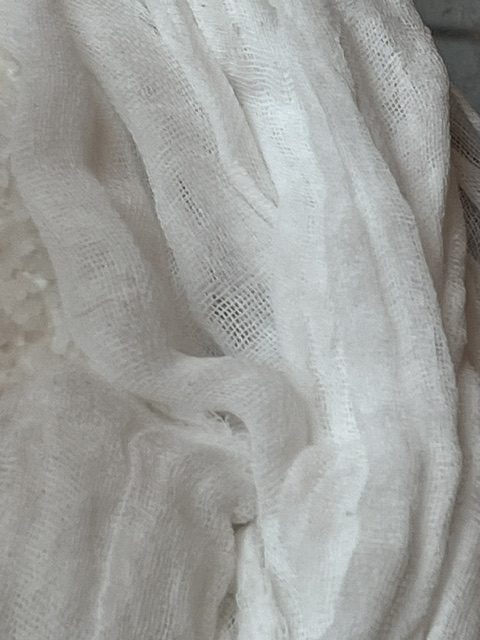
materials: dead sea salt & gauze
The Dead Sea יָם הַמֶּלַח, Yām HaMélaḥ, “Salt Sea”; ٱلْبَحْرُ ٱلْمَيِّت al-Bahr al-Mayyit
or بَحْر لُوط Bahr-Lût Sea of Lot is a hypersaline lake in the Near East
shared between Israel, Jordan, and Palestine.
Gaza derives from the word gauze qazz قز, the raw silk used to dress wounds, which originated in Gazan textile mills.
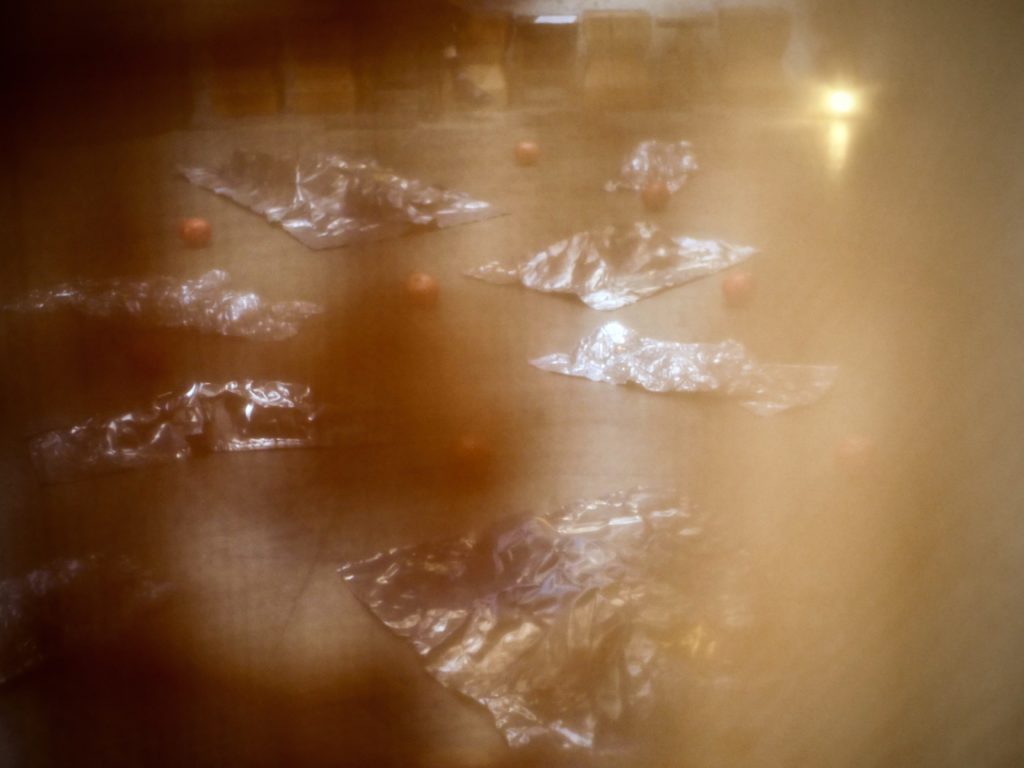
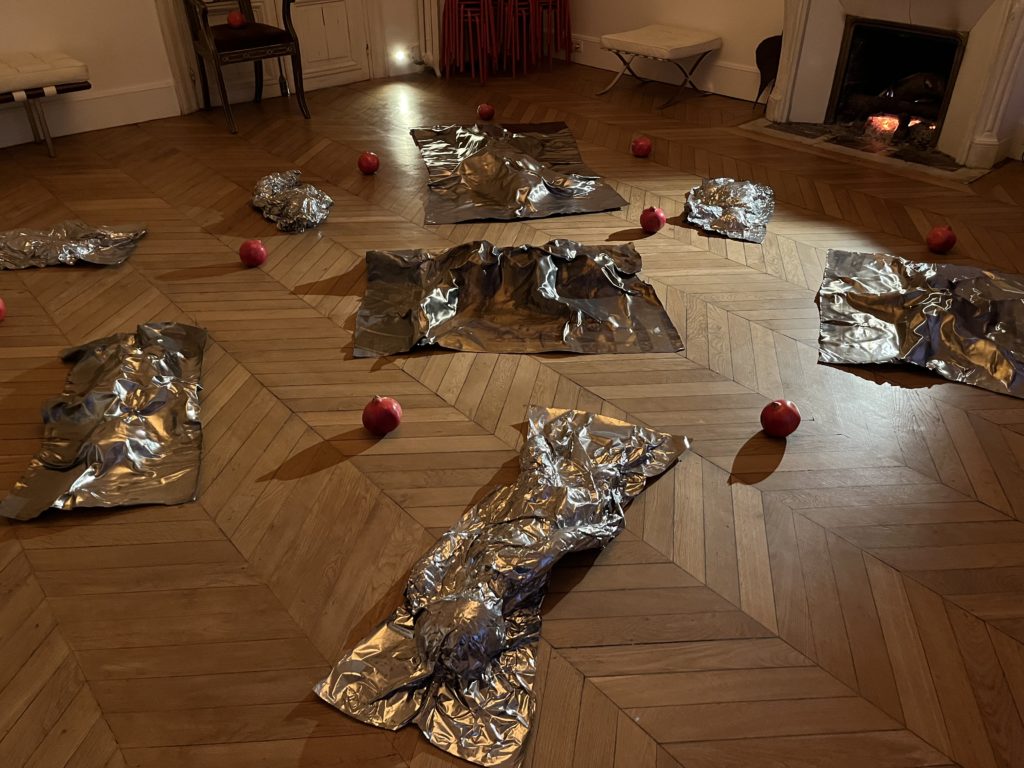
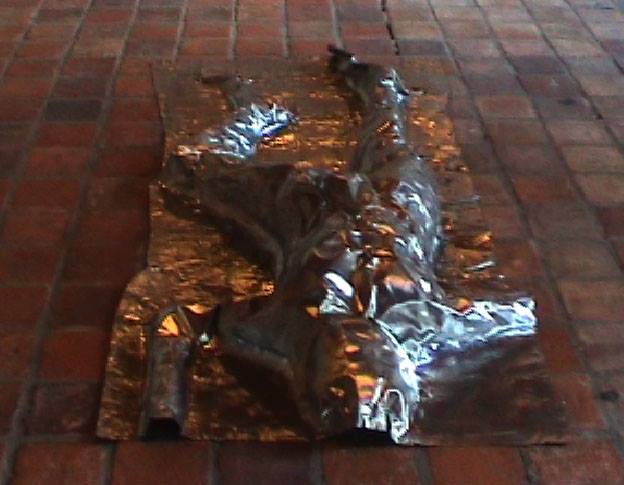
10/07/2023 – After forty days of silence, stupefaction, and despair before the atrocities on either side in our Near East, a land so deeply dear to me, there came a gesture, a response, some shape to conjure as an act of resistance and ceremonial rite. The casting of children’s bodies in sheets of lead, figuring the young victims of war in Gaza – Our kids – and unfolding within the very same spacetime, a musical creation with my accomplice, composer Michaël Grébil Liberg, in which I whisper the names of the Israeli child hostages – the color ofpeace.
A visual and sound installation contained within a single room to re-unite them. A year later, in the spring of 2024, amid the enduring massacres, a double-sided photographic diptych emerged, Lamentations, portraying grieving mothers: Israeli on one side, Palestinian on the other. Beside it sits this salt block from the Dead Sea, carrying all the tears wept on both sides. Salt is living matter. As such it weeps, constantly melting. This work has a lifespan of a few brief months before returning to its primordial state, resorbing into the waters of the Dead Sea.
as part of the Symposium/Exhibition
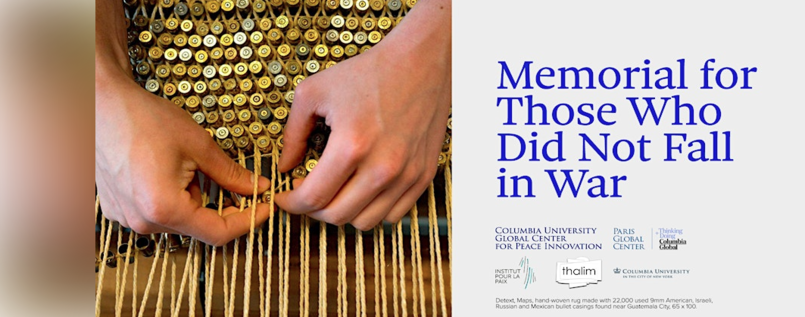
THE MEMORIAL FOR THOSE WHO DID NOT FALL IN WAR
a proposal by Hadas Zahavi
from February 11 to 13, 2026
at REID HALL – 4 rue de Chevreuse 75006 Paris
OPENING RECEPTION ON FEBRUARY 11 AT 6 PM.
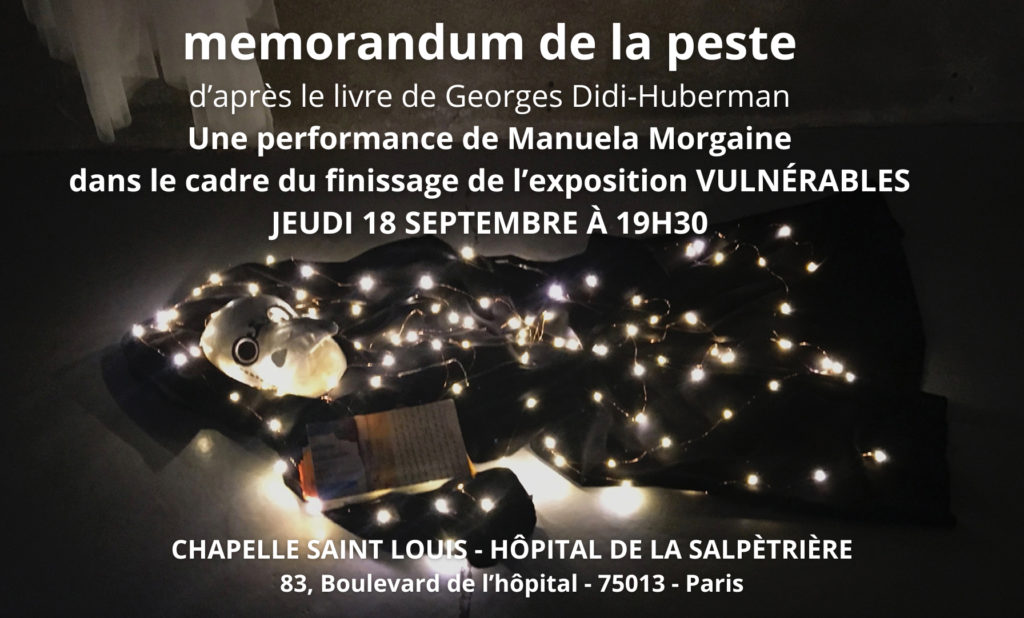
MEMORANDUM OF THE PLAGUE
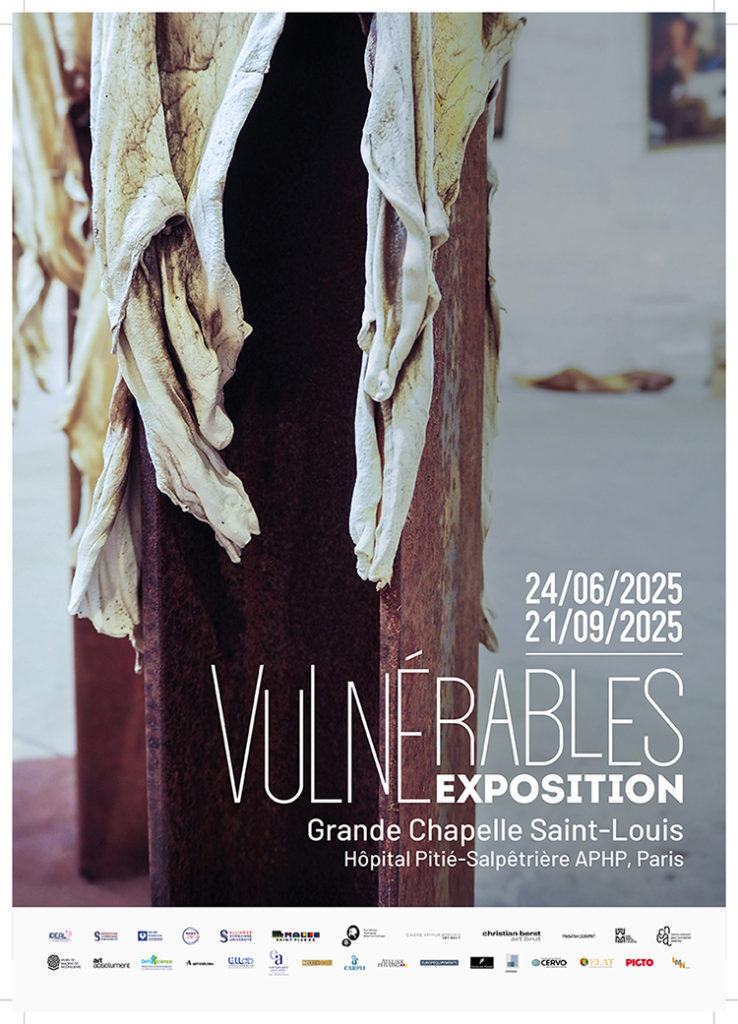
on the occasion of the closing of the exhibition VULNERABLE at the Chapelle de la Salpêtrière
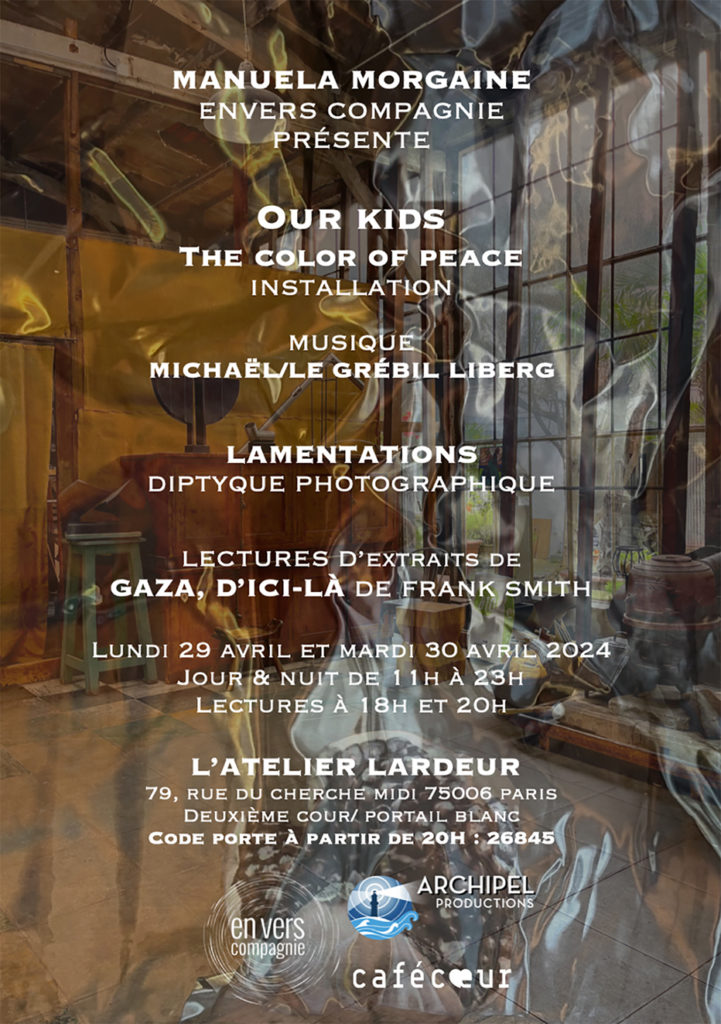
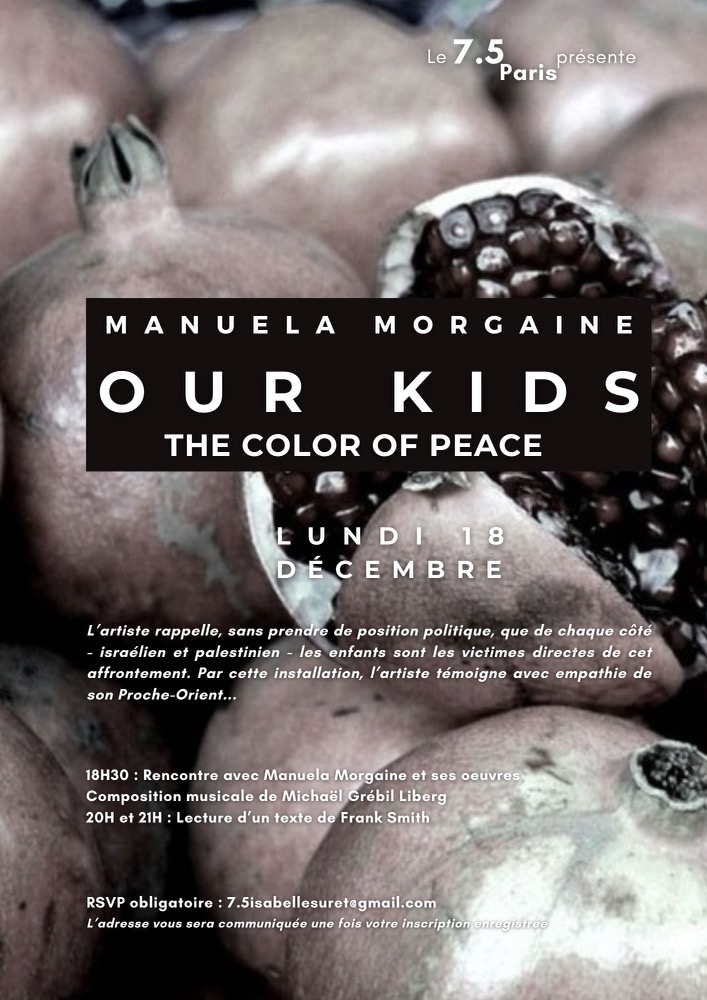
OUR KIDS – the color of peace –
After forty days of silence, stupefaction, and despair
before the atrocities on either side in our Near East,
a land so deeply dear to me, there came a gesture, a response,
some shape to conjure as an act of resistance and ceremonial rite.
The casting of children’s bodies in sheets of lead, figuring
the young victims of war in Gaza, and unfolding within the very same spacetime,
a musical creation with my accomplice, composer Michaël Grébil Liberg,
in which I whisper the names of the Israeli child hostages.
A visual and sound installation contained within a single room to re-unite them.
And then, a reading of GAZA, d’ici-là by Frank Smith, written a decade ago and
never ceasing to reverberate today. This Whole Ensemble, OUR KIDS,
because on either side, these children are our own.
TEASER
OUR KIDS – THE COLOR OF PEACE – TEASER – AN INSTALLATION BY MANUELA MORGAINE from L'Œil à Mémoires on Vimeo.
FULL RECORDING – ATELIER LARDEUR APRIL 30, 2024
OUR KIDS – THE COLOR OF PEACE – INTEGRAL – AN INSTALLATION BY MANUELA MORGAINE from L'Œil à Mémoires on Vimeo.
RECORDING AT LE 7,5 – DECEMBER 18, 2023
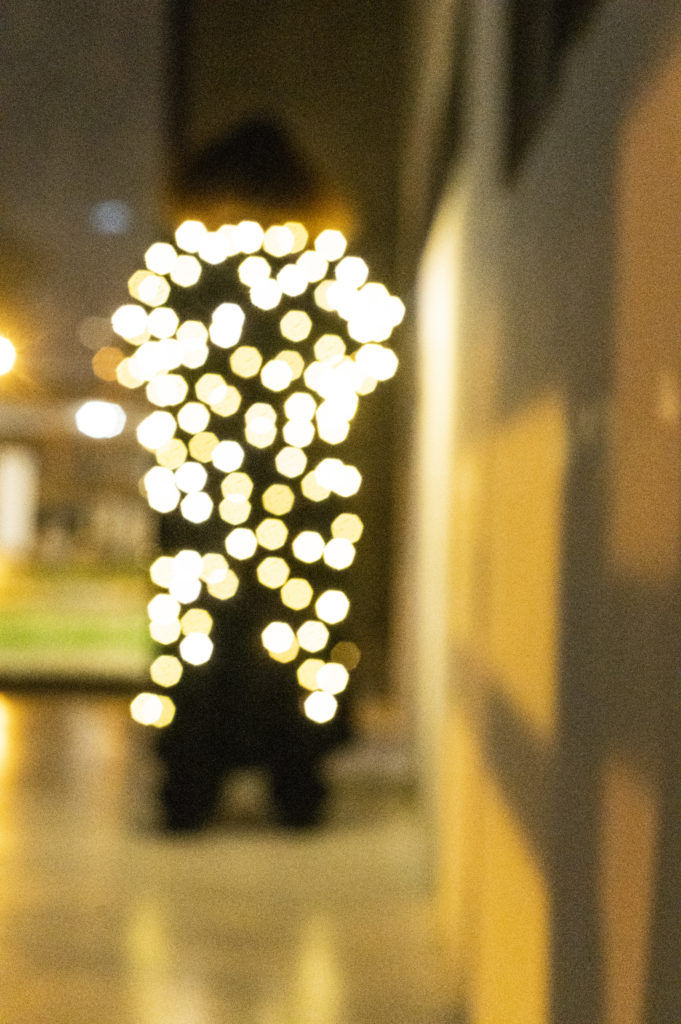
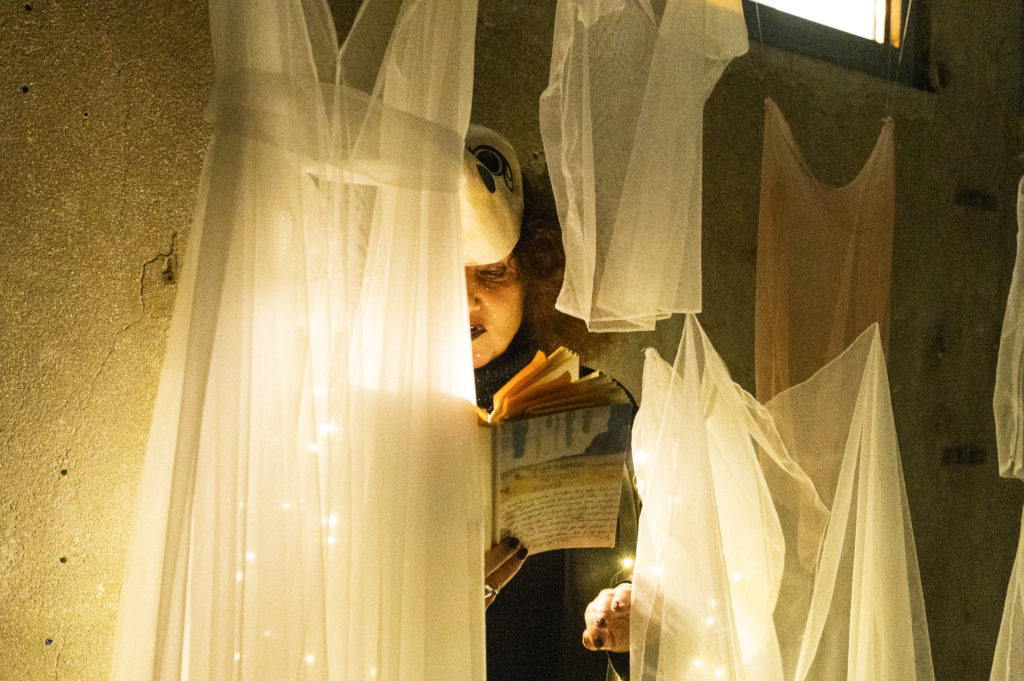
MEMORANDUM OF THE PLAGUE
Based on the book by Georges Didi-Huberman
Fondation Fiminco on November 27, 2021
as part of the exhibition THE CROWN LETTER/PHOTODAYS


Teaser
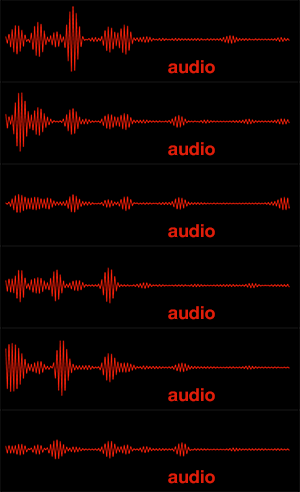
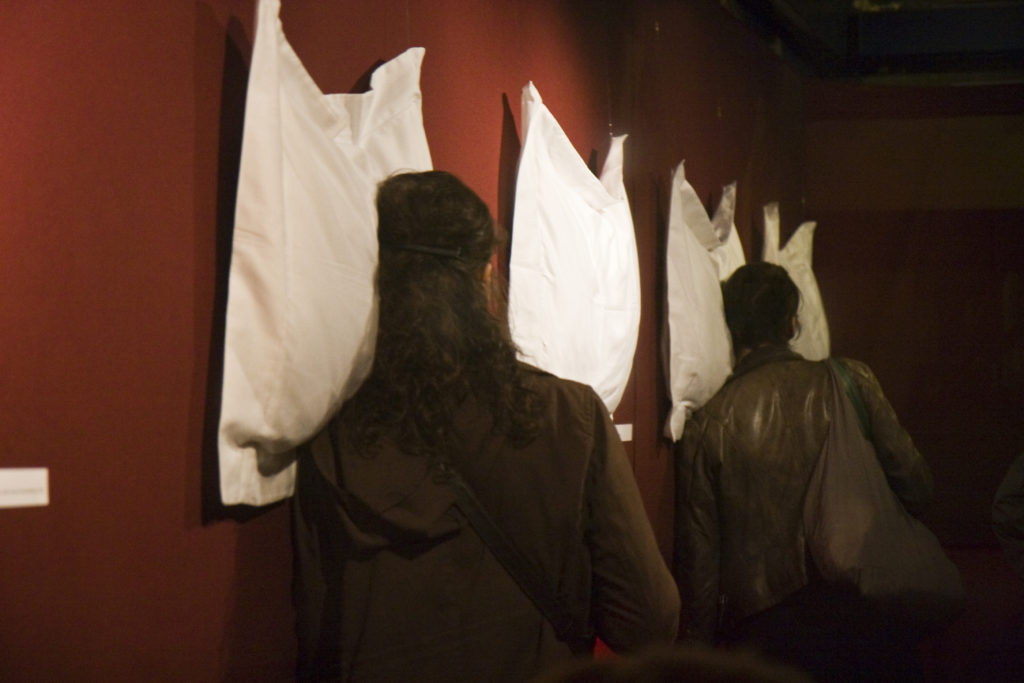
SOUND PILLOWS
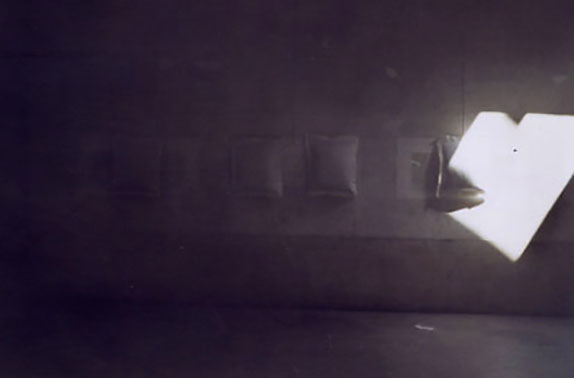
Installation presented as part of the festival CITYSONIC, Mons, 2005
White pillows inhabit a room. They are listening chambers,
inviting an intimate posture. Each holds within it a few minutes
of original composition.
The sonic pillows alternate between sleeping and waking states,
letting whispers of low masses and gentle waves be heard.
Tactile and sonic surfaces.
The pairing of the object with the realm of sleep sets
listeners wandering like somnambulists.
The sensuality of touch against the pillowcase,
the music rising from within the pillow seeks to offer an experience
both tactile and supra-sensory of sound,
the experience of another form of chamber music.
LEAD BODIES
ORACULAR PERFORMANCES
A foreshadowing of ORAKL – a spokesperson in production.
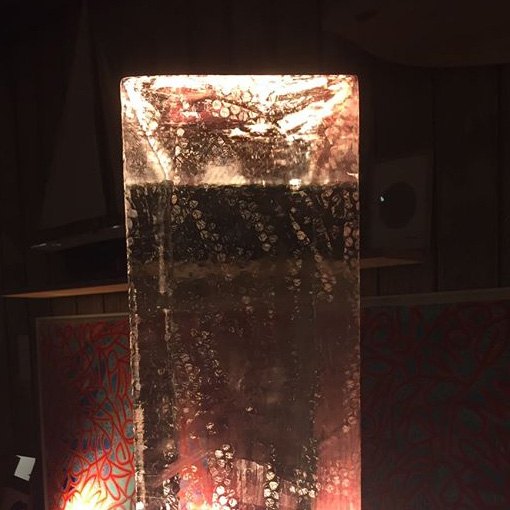
TRAIL OF TEARS – the path of tears
Performance presented at Galerie Maubert, September–December 2013
The Trail of Tears, in Cherokee Nunna daul Isunyi
“the trail where they cried”, in English Trail of Tears,
is the path of forced displacement of several Native American nations
by the United States between 1831 and 1838.
Between 4,000 and 8,000 of them perished along the way, from cold,
hunger, or exhaustion, along the Trail of Tears.
The feather adornment bordering the map of the USA
evokes the setting apart, the confinement onto reservations, of the Indians,
and the two phosphorescent trails, glowing in the night, evoke the two paths
of the Trail of Tears by waterway (Mississippi & Tennessee)
and overland, just as they mirror the twin streams of tears
running down either side of a remembering face.

Teaser
FREEHAND
Performance presented at the Musée Picasso, Paris, on May 22, 2016, with Cyril Hernandez
Freehand is an attempt at reconstruction,
a reshaping of an artwork destroyed by the hand of man.
The performance unfolds in two movements: the projection of an original video,
revealing the sequence of a destruction of ancient statues,
followed by a videographic rewind allowing
the works to be rebuilt—restored—instantaneously.
Then, the live sculpting of a form upon a potter’s wheel,
echoed by the percussive hands of an alchemist musician.
This performance by Manuela Morgaine grapples directly
—and intensely—with the question of the power of creation and destruction
wrought by the hand of Man. Here lies the urgent need
to reinvent Freehand as a continuous artistic form,
in the wake of Picasso’s ceaseless creation,
thus bringing forth a work whose very movement resists,
by taking shape before our eyes, its own destruction.

Teaser
FROSTED PERFORMANCES
SNOW WHITE SLEEPLESS NIGHT
Sound ice
October 5, 2002 – 8:00 p.m. to 8:00 a.m.
Forecourt of the Gaité Lyrique, Paris
The glass coffin preserves intact Snow White and the memory of her fairy tale.
Ice is a wellspring of transparency and preservation.
Snow White Sleepless Night radiates the memory of a performance
or tableau vivant white on white, after the fairy dramolet by Robert Walser,
which came into being at the Centre Culturel Suisse one evening in December 2001.
Of the performance, here, upon the forecourt of the Gaité Lyrique, nothing remains
but visual and sonic matter: the block of ice, on a human scale,
figure of Snow White’s coffin, speaks and holds the soundtrack,
propagating it, while it melts throughout the night.
A sleepless night, a white night—such is its lifespan.
ICEREMONY
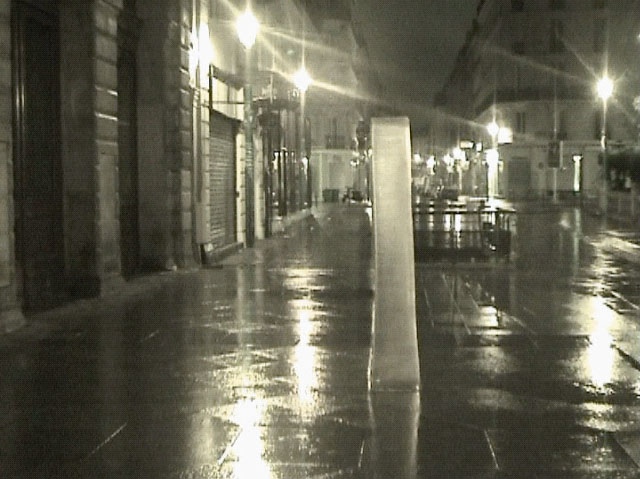
projections of fire ceremonies onto ice
Swedish Cultural Institute, Paris, Nuit Blanche, October 2004
The indigenous peoples of the Americas, Native Americans, hold the secret of the sun and fire.
A surviving species, wounded knee, an escaped kind,
defying extinction. Iceremony preserves their memory in ice.
Ice promises the preservation of faces and their History.
Pierre Lobstein’s videos, captured over fifteen years from
Oklahoma to New Mexico, offer the gaze and voice of the contemporary Indian,
granting it an unprecedented form, gifting it a perspective, a frame, and an aura.
The matter of ice holds intact and crystallizes, diffuses and refracts, sustains and propagates the aura.
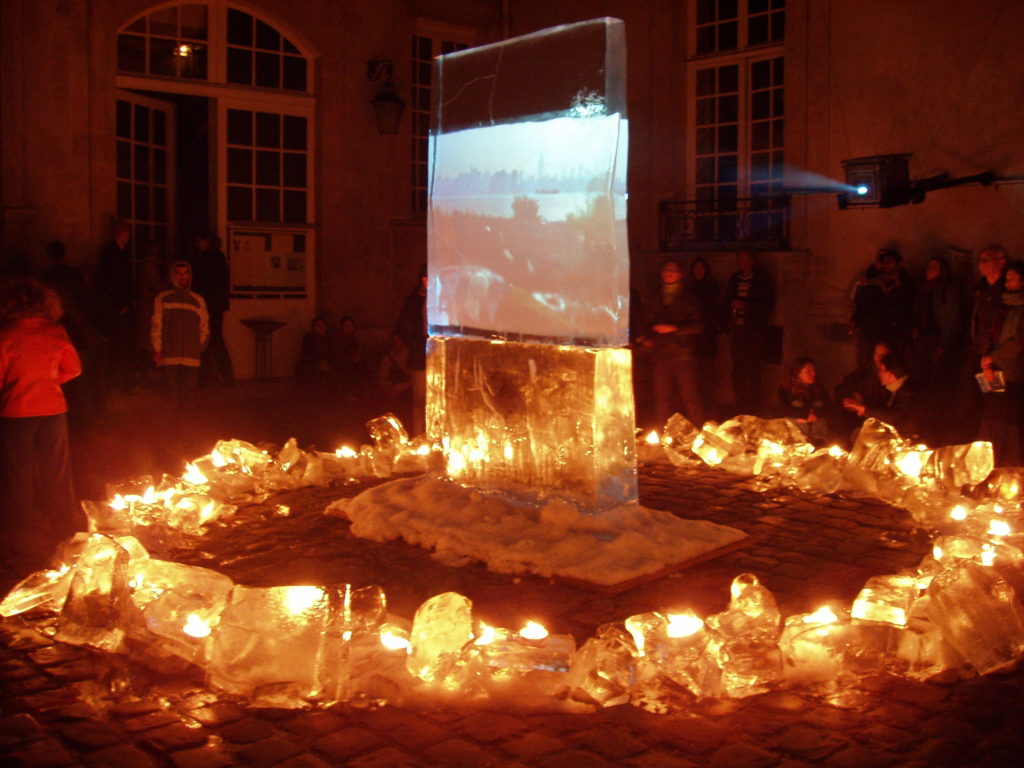
Iceremony, Teaser 2003
Iceremony, 2003
ICELECTRIC
Lightning strikes in ice
Swedish Cultural Institute, Paris, December 11, 2006
as part of “Paris Illumine Paris”.
At nightfall, a projection of diverse lightnings inside
a block of ice set like a lightning rod within the paved courtyard of the Hôtel de Marle.

Icelectric, 2005
OPERA
THE ART OF THE FIG
Opera – Poem
The Art of the Fig was conceived in 1998.
It was premiered as part of the MUSICA festival
in Strasbourg on October 6, 2006. Conceived, from its very inception,
in a musical form of live performance.
Francis Ponge’s The Fig is a poem, looping,
unfurling across its every seam.
It is a poem (thefig) shedding, one by one, each of its skins.
It is the same poem, over a hundred times. Drawn from the book
How a Fig of Words and Why whose principle,
decreed by Ponge himself, is to publish all drafts
and manuscripts of a single poem, without choice or restriction of any kind.
It is the birth of the fig-poem, or how to embody the poem
in the shape of a fig. Johann Sebastian Bach’s The Art of Fugue
as the continuous resonance of the poem-fig.
For this Art, Bach multiplied the paths of orchestration:
keyboards, strings, winds…
This Art is multiplicity, the infinitude of music. It exists to unravel in endless variations.
It is ever the same phrase that, through counterpoint, otherwise elaborates itself.
It is a work that also remains unfinished.
I invited composer Johannes Schöllhorn to rewrite
Johann Sebastian Bach's The Art of Fugue,
and through a play of anamorphoses, he wove several
of the seven movements upon which my project adorns itself.
The oeuvre of Johannes Schöllhorn has forever brought
musical tradition face to face with the contemporary, through the alchemy of transcriptions.
Fig and Fugue intertwined to speak, to hear, and to behold how
something takes shape, and how every form declines and unfolds.
An orchestra (the fugue) performing the one, a narrator (the fig)
performing the other—the principle of variation or counterpoint.